Why Changing Your HVAC Filter Regularly Matters
Your HVAC system works hard to keep your home comfortable throughout the year. While professional maintenance is essential, one of the simplest and most effective things you can do to protect your system is also one of the easiest to overlook:
Change your air filter regularly.
A clean air filter helps your HVAC system operate efficiently, maintain proper airflow, and provide consistent comfort throughout your home. Replacing your filter on schedule can also help prevent unnecessary strain on your equipment and reduce the likelihood of avoidable repairs.
What Happens When an Air Filter Gets Dirty?
Your HVAC filter is designed to capture dust, dirt, pet hair, pollen, and other airborne particles before they enter your system. Over time, those particles build up and restrict the amount of air that can pass through the filter.
When airflow becomes restricted, your HVAC system must work harder to heat or cool your home. This added strain can lead to several problems, including:
- Higher energy bills
- Uneven temperatures throughout the home
- Reduced comfort
- Longer heating and cooling cycles
- Increased wear on HVAC components
- A greater risk of breakdowns and repairs
A severely clogged filter may even cause your system to overheat, freeze up, or shut down.
How Often Should You Change Your HVAC Filter?
Many standard air filters should be checked every 30 days and replaced approximately every 30 to 90 days. However, the right schedule depends on your home, your HVAC system, and the type of filter you use.
You may need to replace your filter more frequently if:
- You have pets
- Someone in the home has allergies or respiratory sensitivities
- Your home has recently undergone construction or renovations
- You live in an area with high levels of dust or pollen
- Your HVAC system runs frequently
- You use a thinner, basic fiberglass filter
Larger media filters may last longer, but they should still be inspected regularly and replaced according to the manufacturer's recommendations.
Choosing the Right Air Filter
Not every filter is appropriate for every HVAC system. Filters are available in different sizes, materials, and efficiency ratings.
A filter with a higher efficiency rating may capture smaller particles, but it can also restrict airflow if the system is not designed to accommodate it. That is why it is important to use the correct filter size and type for your equipment.
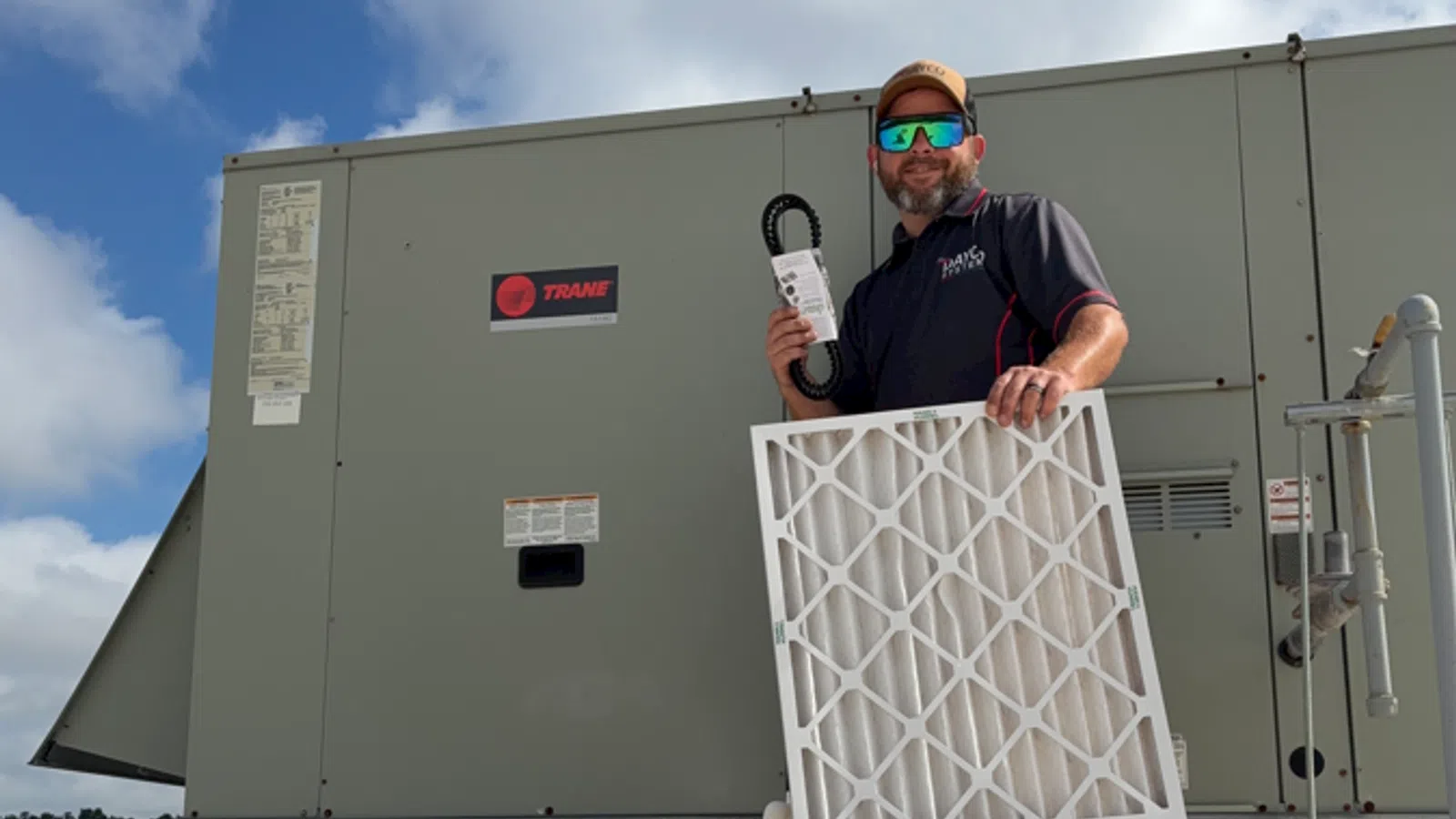
Before purchasing a replacement, check the dimensions printed on the existing filter. You should also pay attention to the arrow on the filter frame, which indicates the proper direction of airflow when installing it.
A Small Task That Can Make a Big Difference
Changing your HVAC filter only takes a few minutes, but it can have a meaningful impact on your system's performance and longevity. A clean filter can help:
- Improve airflow
- Support consistent indoor comfort
- Reduce unnecessary energy use
- Protect internal HVAC components
- Improve the system's overall performance
- Reduce the risk of preventable service calls
It is one of the most affordable ways to care for your HVAC system between professional maintenance visits.
Need Help With Your HVAC Filter?
Not sure which filter your system requires or how often it should be changed? The Dayco Systems team can help you identify the correct filter and provide recommendations based on your home and equipment.
Regular filter changes, routine maintenance, and professional inspections can work together to help keep your system operating safely and efficiently.
Contact Dayco Systems today and let us help keep Your Day in Comfort.